Saturday, November 29, 2025

California’s New Wave of TV Tax Credits Is Fueling an L.A. Production Comeback

By Nina Steiner 310.487.2982

Inspired by reporting from Deadline and writer Dominic Patten.

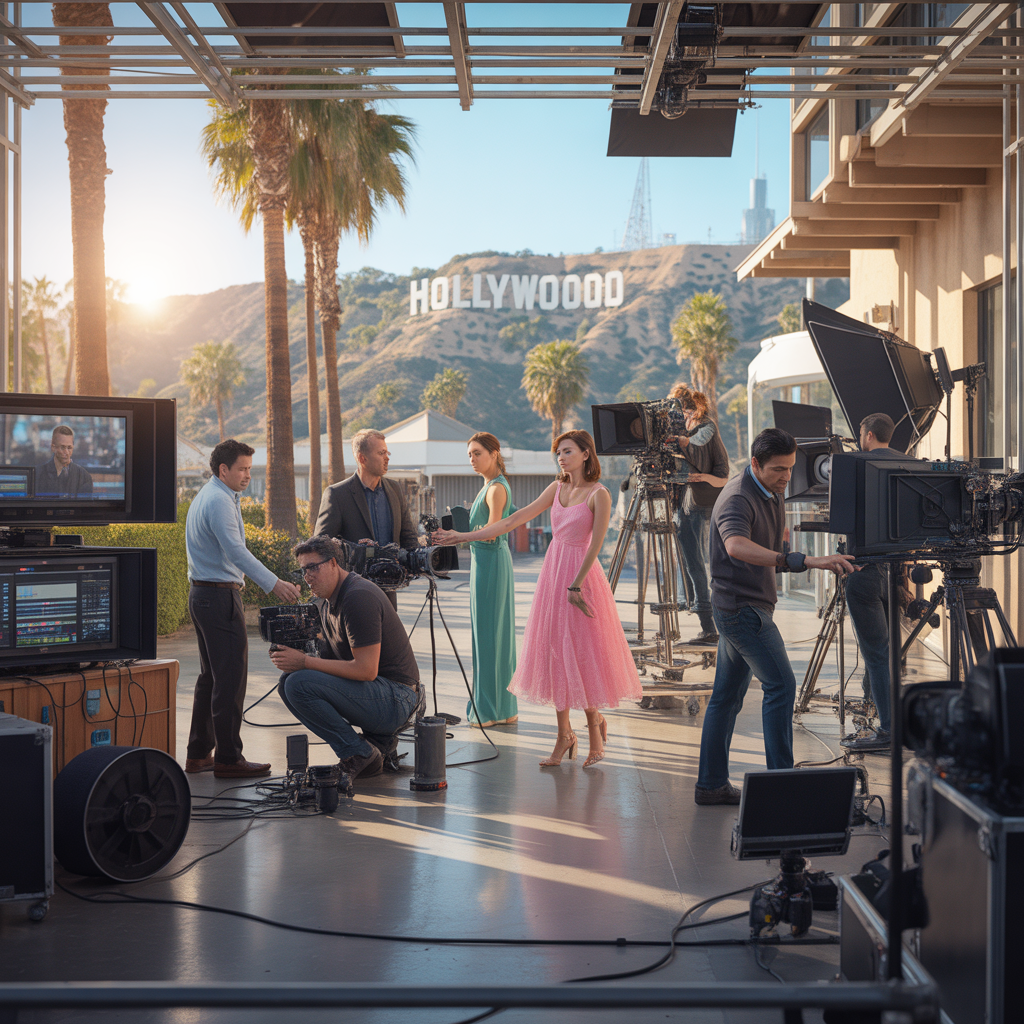
The Los Angeles entertainment economy just picked up real momentum, and this time, it’s coming from Sacramento. California’s latest round of TV tax credits has injected hundreds of millions of dollars back into the industry, giving studios a financial reason to bring full seasons home instead of chasing cheaper locations.

While Deadline highlighted several major recipients, the bigger takeaway is clear:
This is one of the strongest signals we’ve seen that production volume in Los Angeles is ready to rebound.

Why These New Credits Matter Right Now

  • Productions have been spread across Toronto, Atlanta, Albuquerque, London, and Vancouver.
  • L.A. has seen lighter pilot seasons and fewer long-term leases.
  • Strong incentives keep shows local by reducing runaway production costs.

The timing couldn’t be better. After years of watching productions hop state lines or head overseas, California’s boosted tax credits finally give studios a meaningful economic anchor. For crews who’ve faced unpredictable work cycles since 2020, this shift brings some long-overdue stability.

A Mix of Returning Favorites and Newcomers Are Taking a Fresh Look at California

  • Shows like The Rookie, 9-1-1, and American Crime Story have long taken advantage of L.A.’s infrastructure.
  • Other series, such as Abbott Elementary, You, and Grey’s Anatomy, continue to explore the benefits of keeping production local.
  • High-budget genre titles like Reacher, Halo, or The Morning Show are the type that gain the most from expanded credit ceilings.

While the recent tax credit news focused on a handful of titles, plenty of other productions are now reconsidering California for future seasons. Any show with a large ensemble, recurring stunt work, or big build requirements stands to benefit. The bigger the credit pool, the more likely these productions stay where their talent, and their crews, already live.

More Credits Translate Directly Into More Jobs

  • Below-the-line workers see the biggest lift with every season that films in L.A.
  • Production offices, art departments, and post teams ramp up quickly when shows commit to full episodes here.
  • Local rental houses, vendors, catering teams, and small businesses all see the spillover.

This surge isn’t just about star-driven prestige series. It’s about the thousands of L.A. professionals who make these shows possible. When an entire season films in Los Angeles, the economic ripple is massive, and that steady work matters for families, unions, and the long-term health of the creative workforce.

Production Office and Stage Demand Strengthen with Each New Season

  • Shows typically lease office and stage space for 6–18 months.
  • Writers’ rooms often lock in space well before official greenlights.
  • Storage, flex space, design hubs, and warehouse builds return to the Westside and the Valley as budgets open up.

When a show chooses L.A., its presence expands far beyond the stage. A full season means multiple layers of real estate activity, from Santa Monica production offices to Marina del Rey flex suites to industrial space for builds and props. The more competitive California becomes, the more predictable this leasing cycle becomes for everyone.

California’s Expanded Program Sets Up Long-Term Stability

  • The budget increase to $750 million annually is a major strategic shift.
  • Higher base credit percentages finally make California competitive with other states.
  • New categories beginning in 2026 will include animation, large-scale competition shows, and hybrid projects.

This isn’t a band-aid, it’s a structural overhaul. With more funding and broader eligibility, California is positioning itself as a long-term home for episodic production again. After several years of uncertainty, the industry finally gets something it has been missing predictability.

What This Means for L.A. Heading Into 2026–2028

  • More shows in town means fewer crews forced to chase work in other states.
  • More filming days generate stronger revenue for hotels, restaurants, vendors, and independent contractors.
  • More stable production pipelines support the long-term growth of writers, producers, and department heads.

Los Angeles has always had talent, stages, and infrastructure, what it needed was a financial incentive strong enough to compete. Now it has it. And the domino effect for the local economy is already starting to show.

The Bigger Picture: A Win for Everyone in the Entertainment Ecosystem

  • Incentives help maintain studio facilities, equipment houses, and the skilled labor force.
  • Productions can budget more confidently and plan multi-season arcs without relocation.
  • L.A. retains its competitive advantage by keeping creativity, innovation, and jobs local.

Film and television are core economic drivers for California. These tax credits reinforce what makes Los Angeles irreplaceable: unmatched crews, decades of experience, and a city built to support storytelling at every level. When production stays local, the entire region benefits.

California’s expanded TV tax credit program sends a clear message:

Production belongs in Los Angeles, and the state is ready to fight for it.

For crews, creators, vendors, and every business tied to entertainment, this momentum is exactly what the city needed. And from where I sit, working with teams every day to secure office and flex space across the Westside, it feels like the beginning of a true production resurgence.

If your team is exploring short-term or long-term space in L.A., happy to share options anytime.

By Nina Steiner 310.487.2982


The post California’s New Wave of TV Tax Credits Is Fueling an L.A. Production Comeback appeared first on TenantRepLA.


Read the full post here:"https://tenantrepla.com/californias-new-wave-of-tv-tax-credits-is-fueling-an-l-a-production-comeback/">https://tenantrepla.com/californias-new-wave-of-tv-tax-credits-is-fueling-an-l-a-production-comeback/

Friday, November 14, 2025

Los Angeles Paralympics 2028 Guide: Adaptive Sports, Local Programs, and How to Find Accessible Space for Teams & Organizations

By Nina Steiner Call / Text 310.487.2982 or  Email Nina

Los Angeles is on track to become the global hub for adaptive sports, and the momentum is building fast. With the 2028 Paralympic Games approaching, L.A. is expanding training programs, investing in accessibility, and attracting athletes, nonprofits, and organizations looking to establish a strong presence before the Games. Part of that growth includes securing the right accessible space, from offices to training facilities. and that’s where I help teams and organizations prepare successfully for the road to 2028.

How Los Angeles Is Building a Paralympic-Ready City

Across the region, from Santa Monica to Downtown to the South Bay, organizations are gearing up for increased participation, media attention, and operational needs. L.A. isn’t waiting for 2028; it’s actively shaping a long-term ecosystem where adaptive athletes, coaches, and support teams can train, work, and grow.

And for many of these groups, one of the first questions is:
“Where do we operate from?”
That includes accessible offices, community-facing headquarters, training spaces, and short-term production or event space.

Here’s what’s driving Los Angeles forward:

Key Advancements Fueling L.A.’s Paralympic Momentum

  • Expanding Accessible Facilities
    With over 22 adaptive-friendly facilities, including the Toyota Sports Performance Center in El Segundo and multiple LA84 Foundation sites, L.A. offers a wide range of spaces where athletes can safely train. Many groups also need office space nearby to coordinate programs, staff, and logistics.
  • Strengthening Youth Development Pipelines
    Programs like Angel City Sports, which impacts more than 1,000 young athletes annually, rely on functional operational space to grow. I help organizations find offices near parks, universities, and recreation centers to streamline programming and events.
  • Growing Adaptive Sports Technology Sector
    Innovation hubs in Santa Monica, Torrance, and Pasadena are producing world-class prosthetics and training tools. These companies often need light industrial, R&D, or hybrid workspaces, and I assist in locating accessible buildings that match technical requirements.
  • Local Competitions Increasing Demand for Space
    The Angel City Games at UCLA, drawing athletes from 40+ states, require staging areas, storage, and temporary operations hubs. I help groups secure short-term and long-term space to support events of this scale.
  • Major Accessibility Investments
    L.A. has upgraded 150+ miles of sidewalks and enhanced public facilities citywide. Organizations preparing for 2028 need spaces that meet ADA standards, and I help evaluate each property’s accessibility, from parking and restrooms to elevators and path of travel.
  • High Concentration of Elite Athletes
    With growing athlete communities training at UCLA, USC, CSULB, Loyola Marymount, and Westside facilities, many teams need space near these hubs. I guide them toward options that minimize commute times and support daily training schedules.

Why the Los Angeles Paralympics Will Be a Turning Point

The 2028 Paralympics has already begun reshaping expectations, not only for athletes, but for the organizations, brands, and content teams supporting them. And as the momentum builds, the need for dedicated space grows with it.

 L.A.’s Media Power Creates Unmatched Visibility

As the entertainment capital of the world, Los Angeles provides unparalleled opportunities for athlete storytelling, sponsorships, and adaptive-sports coverage. Production companies supporting Paralympic content often require temporary production offices, editing suites, or creative workspace, and I help secure those in key locations like Culver City, Santa Monica, and Hollywood.

A Year-Round Training Environment

With 300+ sunny days per year, L.A. enables continuous outdoor and indoor training. From adaptive surfing in Malibu to track sessions at UCLA, training organizations often need nearby office or warehouse space for equipment storage, recovery rooms, or staff—another area where I serve as a resource.

Commitment to Inclusion and Growth

L.A.’s diversity fuels a strong culture of inclusion. Nonprofits, coaches, and youth programs rely on accessible work and training environments. Many of them reach out for help finding space that meets budget, location, and accessibility standards, and I help them navigate that process efficiently.

Adaptive Sports Gaining Momentum Throughout L.A.

Los Angeles offers one of the widest ranges of adaptive sports programs in the U.S., supported by facilities and communities across the region.

Adaptive Sports Growing in Popularity Across Los Angeles

  • Wheelchair basketball in Van Nuys and the Valley
  • Adaptive surfing in Malibu, Venice, and Manhattan Beach
  • Paralympic track & field training at UCLA
  • Adaptive rowing at Marina del Rey
  • Wheelchair tennis in Carson and Westchester
  • Sled hockey in El Segundo

As these programs expand, the support teams behind them increasingly require space for operations, whether it’s 3,000 SF of office space or 20,000 SF of warehouse-style training buildouts. I help bridge that gap.

How I Support Paralympic Teams, Nonprofits, and Sports Organizations With Space

As Los Angeles prepares for 2028, many organizations are asking the same question:

“Where can we find accessible, centrally located space that works for our athletes and staff?”

Here’s how I help:

  • Finding accessible office, training, and operational space in West L.A., Santa Monica, Culver City, Marina del Rey, and surrounding areas
  • Evaluating ADA compliance across restrooms, elevators, parking, entrances, and internal layout
  • Locating warehouses or hybrid spaces for equipment storage, training build-outs, or media production
  • Sourcing flexible short-term or long-term leases for teams preparing for major events
  • Touring multiple properties quickly, even with specialized requirements
  • Helping nonprofits secure affordable solutions without sacrificing functionality

Los Angeles has the resources—my role is to help adaptive sports organizations find the physical space that brings their mission to life.

Frequently Asked Questions

How can organizations find accessible space in Los Angeles for Paralympic-related work?

Work with a broker who understands adaptive sports, accessibility needs, and the Westside market. I help teams evaluate ADA compliance, identify suitable buildings, and secure the right mix of office, training, and storage space near key universities and athletic hubs.

What neighborhoods are best for Paralympic teams or adaptive sports programs?

Top areas include Culver City, Westwood, Santa Monica, Playa Vista, Marina del Rey, Carson, and South Bay. These locations offer proximity to universities, gyms, training centers, and major venues, all essential for teams preparing for 2028.

How early should organizations secure space ahead of the 2028 Games?

Most groups should begin the search 12–24 months in advance, especially if they need specialized buildouts or large, accessible facilities. Space demand will rise significantly as 2028 approaches, and early planning ensures better options and pricing.

By Nina Steiner Call / Text 310.487.2982 or  Email Nina


The post Los Angeles Paralympics 2028 Guide: Adaptive Sports, Local Programs, and How to Find Accessible Space for Teams & Organizations appeared first on TenantRepLA.


Read the full post here:"https://tenantrepla.com/los-angeles-paralympics-2028-guide-adaptive-sports-local-programs-and-how-to-find-accessible-space-for-teams-organizations/">https://tenantrepla.com/los-angeles-paralympics-2028-guide-adaptive-sports-local-programs-and-how-to-find-accessible-space-for-teams-organizations/

Sunday, November 2, 2025

Is New Jersey Becoming the New Hollywood

Nina Steiner TenantRepLA 310-487-2982

“The motion picture industry was born in New Jersey; Fort Lee was Hollywood before there even was a Hollywood.”

Phil Murphy, Governor of New Jersey

The film industry is shifting, and this time, the spotlight’s not on Los Angeles or Atlanta. It’s New Jersey that’s catching the camera’s eye. With tax incentives, new studios, and major players like Paramount and Netflix moving in, the Garden State is quickly becoming one of the fastest-growing production hubs in America.

This isn’t just a trend, it’s a transformation. Let’s break down why Hollywood is going East.

A Short Story of How It Started

Not long ago, New Jersey’s film history was a forgotten footnote. Ironically, it’s where motion pictures were born, Thomas Edison built the world’s first film studio in West Orange back in the 1890s. But for decades, production left for California’s sunshine and sound stages.

Fast-forward to today: studios are circling back. After years of losing projects to other states, New Jersey rebooted its film incentive program in 2018. The results? Record production numbers, new studio construction, and billions in economic activity.

Why Studios Are Choosing New Jersey

Tax incentives alone don’t create a film movement, but they definitely roll out the red carpet. The state’s Film and Digital Media Tax Credit Program offers up to 40% back on qualified production expenses, one of the most competitive in the country. Add diverse locations and proximity to New York City, and you get a winning production formula.

 Key factors attracting studios:

  • Massive tax credits: Up to 40% in film and digital media tax breaks, plus bonuses for hiring local workers.
  • Record-breaking production spending: $833 million in 2024 across 500+ productions.
  • Diverse landscapes: Urban skylines, small towns, beaches, and forests — all within two hours.
  • Strategic proximity: Minutes from Manhattan’s talent and post-production resources.
  • Workforce investment: Training programs prepare local crews for steady employment.

Big Names Are Moving In

It’s not just indie filmmakers setting up shop, major studios are planting permanent roots.

In 2024, Paramount signed a 10-year lease at 1888 Studios in Bayonne, a 1.6-million-square-foot complex designed to rival Hollywood’s best. Meanwhile, Netflix broke ground on a 500,000-square-foot campus at Fort Monmouth, and Lionsgate partnered with Great Point Studios to build a 253,000-square-foot facility in Newark. 

Recent studio deals fueling the boom:

  • Paramount + 1888 Studios (Bayonne) – 10-year lease, 285,000+ SF, 58-acre campus.
  • Netflix (Fort Monmouth) – 500,000 SF film campus under construction.
  • Lionsgate (Newark) – 253,000 SF production facility with long-term commitment.
  • Studio Partner Program (NJEDA) – Up to 40% tax credit for studios leasing 250,000+ SF for 10 years.

These deals aren’t just headlines, they represent long-term investment, job creation, and industry infrastructure that’s reshaping the state’s economy.

What’s Driving the East Coast Film Boom

Behind every studio expansion is a strong economic story. New Jersey’s strategy isn’t just about attracting films—it’s about building a permanent creative economy. Dozens of “Film-Ready Communities” have streamlined permits and embraced production as a driver for local growth.

Here’s what’s fueling the momentum:

  • Lower costs: Filming can be up to 25% cheaper than in New York City.
  • Simplified permitting: Designated communities fast-track production approval.
  • Infrastructure growth: New soundstages and post-production facilities open annually.
  • Skilled labor pool: Local universities and trade programs train new film professionals.

Hollywood East: The New Reality

Streaming platforms have changed the game, more shows, shorter production cycles, and demand for year-round facilities.

Studios can’t rely solely on Los Angeles anymore. They need regional hubs that balance cost, quality, and access to talent.

New Jersey checks every box.

Producers can shoot in urban backdrops, small towns, and scenic coasts without ever leaving the state. It’s efficient, affordable, and just across the river from New York City.

For a state that launched the first motion picture studio over a century ago, it’s a historic comeback story.

The Ripple Effect on Real Estate and Business

Every new studio campus triggers a wave of commercial demand.

 Here’s what follows studio development:

  • Office space: Needed for production companies, writers, and post teams.
  • Industrial space: For set construction, costume storage, and logistics.
  • Retail & hospitality: Restaurants, hotels, and cafes benefit from crews and talent.

In short: where studios go, entire communities thrive. Developers and brokers are now looking at secondary markets near Bayonne, Newark, and Fort Monmouth to meet the growing need for support space.

Lessons for Real Estate and Economic Growth

New Jersey’s film resurgence offers lessons for any region aiming to attract creative industries:

  • Incentives drive commitment. Tax credits tied to square footage and lease term attract serious tenants.
  • Long-term leases stabilize markets. Studios often sign for 10+ years, ensuring steady occupancy.
  • Public-private collaboration matters. Developers and policymakers aligned their goals early.
  • Spillover effects are real. Film production drives retail, housing, and service growth nearby.

This is economic development through storytelling. and New Jersey’s script is working.

What’s Next

More studios are on the way. Towns like Newark and Bayonne are already expanding infrastructure to accommodate future film, streaming, and advertising production. Suburban areas are being scouted for auxiliary facilities, from warehouses to creative offices.

It’s no longer a question of if New Jersey becomes “Hollywood East.” It’s how big the industry will grow , and how quickly surrounding communities can adapt to the opportunity.

Final Takeaway

New Jersey’s rise as a film powerhouse proves that Hollywood isn’t defined by geography, it’s defined by innovation. The Garden State’s success shows what happens when creativity meets smart policy and long-term investment.

For real estate professionals, developers, and business leaders, this new wave of film production is more than entertainment—it’s a case study in how industries evolve, relocate, and thrive.

Because sometimes, the next big scene doesn’t roll in Hollywood. It starts right here in New Jersey.

If you are looking for space in New Jersey for your film business, contact me.

Nina Steiner TenantRepLA 310-487-2982

I have broker partners nationwide.


The post Is New Jersey Becoming the New Hollywood appeared first on TenantRepLA.


Read the full post here:"https://tenantrepla.com/is-new-jersey-becoming-the-new-hollywood/">https://tenantrepla.com/is-new-jersey-becoming-the-new-hollywood/

Culver City vs Santa Monica Office Space: Key Differences for Westside Companies

By Nina Steiner, Call/Text 310.487.2982 Compare Culver City vs Santa Monica office space for tech, media, and creative companies. Explore ...